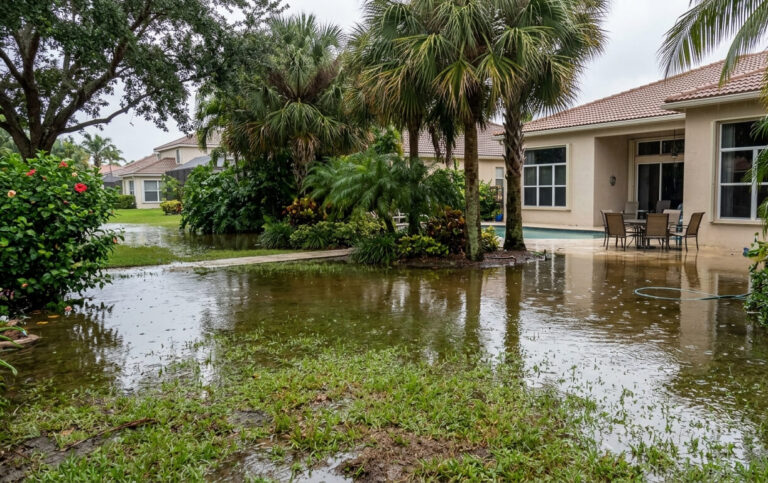
Healthy trees can add shade, privacy and natural beauty to a South Florida property. However, a damaged or unstable tree can become a serious concern, especially when it is located near a home, driveway, pool, fence or utility line.
Not every unhealthy tree needs to be removed. In some cases, professional trimming or corrective pruning may be enough. The key is recognizing warning signs early and having the tree evaluated before the problem becomes more difficult or expensive.
UF/IFAS identifies large dead branches, damaged or decaying roots, trunk cracks and rot as important warning signs that a tree may have structural problems.
Here are seven signs that it may be time to schedule a professional tree inspection.
1. The Tree Has Large Dead Branches
A few small dead twigs are not always an emergency, but large dead branches can present a hazard. They may break unexpectedly during wind, heavy rain or normal weather conditions.
Pay particular attention to branches located above:
- Roofs and screened enclosures
- Driveways and parked vehicles
- Sidewalks and entrances
- Pools and outdoor living areas
- Neighboring properties
Professional tree trimming may be able to remove the affected branches while preserving the tree. If a large portion of the canopy is dead, however, complete removal may be the safer long-term option.
2. You Notice Cracks, Cavities or Decay in the Trunk
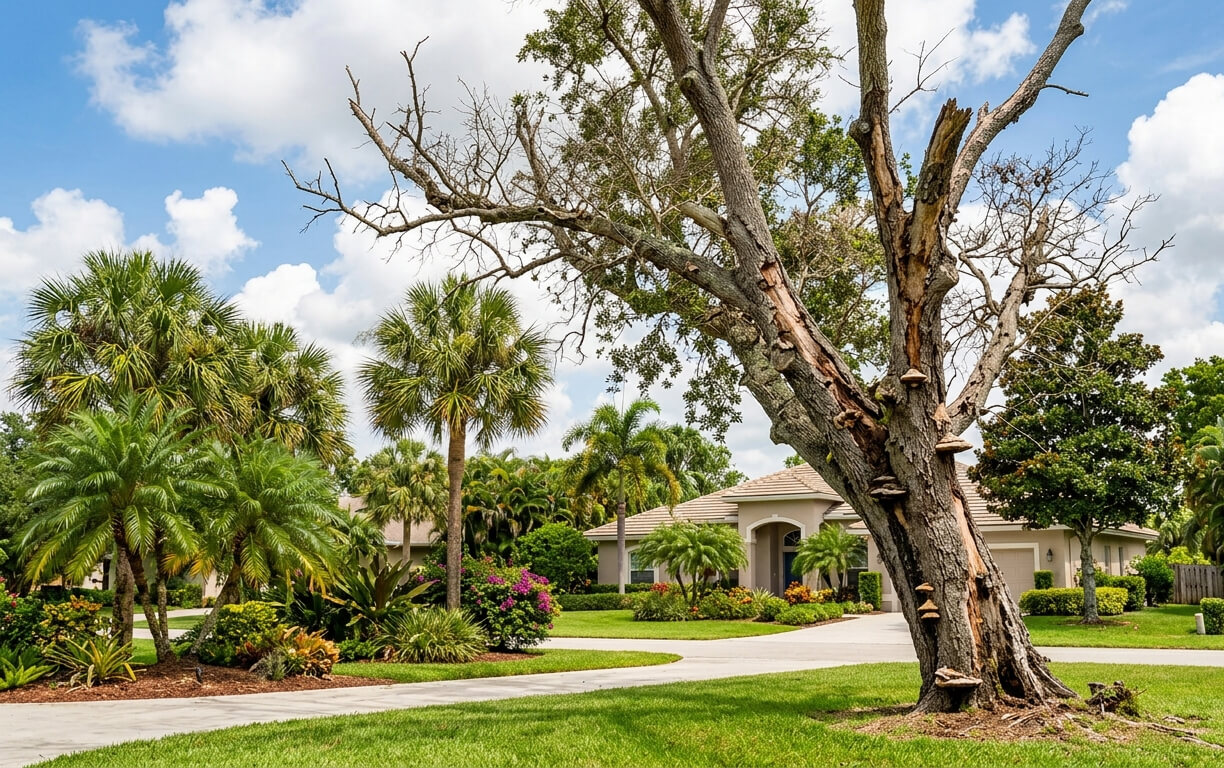
The trunk supports the entire tree. Deep cracks, large cavities, missing bark and soft or decayed areas can indicate that its structural strength has been compromised.
A vertical crack extending into the wood may indicate a structural problem. Advanced trunk decay or a severe lean should be evaluated for possible removal.
Small surface damage does not necessarily mean that a tree must come down. A professional inspection is needed to determine how deeply the damage extends and whether the tree can still be managed safely.
3. The Tree Has Started Leaning
Some trees grow naturally at an angle and remain stable for many years. A new or increasingly noticeable lean is more concerning.
Look for additional warning signs around the base of the tree:
- Raised or cracked soil
- Exposed roots
- A gap forming between the soil and trunk
- Roots lifting on the opposite side of the lean
- Recent movement following a storm
A sudden lean may indicate that the root system is failing. This situation should be evaluated promptly, particularly when the tree could fall toward a building, road or frequently used outdoor area.
4. The Roots Are Damaged or Decaying
Tree roots provide both stability and access to water and nutrients. Root damage may occur because of construction, trenching, soil compaction, excessive moisture, disease or changes to the surrounding grade.
Since much of the root system is below ground, the problem is not always obvious. Possible above-ground signs include thinning foliage, branch dieback, reduced growth, mushrooms around the base or an unstable trunk.
Damaged or decaying support roots can increase the likelihood of tree failure.
5. The Tree Was Seriously Damaged During a Storm
Broken limbs do not automatically mean that a tree is beyond saving. Many storm-damaged trees can recover with proper pruning and follow-up care.
However, removal may be recommended when:
- The main trunk has split
- Major support roots have failed
- A substantial part of the canopy is gone
- Multiple large branches are cracked
- The remaining structure is unbalanced
- The tree has shifted significantly in the soil
Cracked sections should not simply be left in place. UF/IFAS recommends removing cracked portions and evaluating the remaining structure after storm damage.
6. The Tree Is Too Close to a Structure
A healthy tree growing close to a building does not always require removal. The concern depends on the tree’s size, condition, species, root system and direction of growth.
An inspection may be appropriate when branches repeatedly scrape the roof, roots affect paving, the trunk presses against a fence or the canopy hangs over a large portion of the building.
In some cases, selective pruning can improve clearance. In others, continued growth may make removal the more practical option.
7. The Tree Continues to Decline
A tree that repeatedly loses large branches, develops significant dieback or produces progressively fewer leaves may be in long-term decline.
Warning signs can include:
- A thinning canopy
- Dead branches near the top
- Repeated limb failure
- Significant bark loss
- Fungal growth near the trunk
- Reduced leaf size or density
- No new seasonal growth
The sooner the tree is evaluated, the more options may be available. Waiting until it becomes completely unstable can make the removal process more complicated.
Tree Trimming or Tree Removal?
Professional tree removal should not automatically be the first recommendation. Depending on the condition of the tree, the appropriate solution may include:
- Removing dead or damaged branches
- Reducing weight on overextended limbs
- Improving structural balance
- Creating clearance from buildings
- Monitoring the tree for additional changes
- Completely removing an unsafe tree
The decision should be based on the tree’s condition, location and potential consequences if it fails.
Schedule a Tree Inspection in Coral Springs
Green Planet provides tree removal, tree trimming and stump grinding for residential and commercial properties in Coral Springs and throughout South Florida. The company’s service area also includes Fort Lauderdale, Boca Raton, Pompano Beach, Palm Beach, Broward and Miami-Dade.
Concerned about a leaning, damaged or unwanted tree? Request a consultation to receive a clear recommendation and project estimate.
Frequently Asked Questions
Can a damaged tree be saved?
Sometimes. Professional pruning may be able to remove damaged sections and improve the remaining structure. Trees with severe trunk decay, major root failure or extensive structural damage may require removal.
When should a tree be inspected after a storm?
Inspect the property once conditions are safe. Schedule professional help promptly when a tree has shifted, developed a major crack or dropped large branches.
Does tree removal include stump removal?
Tree removal and stump grinding are often treated as separate parts of the project. Ask whether stump grinding and debris cleanup are included in your estimate.