A beautiful landscape should improve your property without requiring constant watering, pruning and replacement.
Low-maintenance landscape design is not about eliminating plants or covering the entire yard with stone. It is about selecting the right materials, placing plants where they can thrive and designing irrigation, drainage and hardscaping as one coordinated system.
The Florida-Friendly Landscaping program emphasizes principles such as choosing the right plant for the right place, watering efficiently, using mulch and reducing stormwater runoff.
Here is how those ideas can be incorporated into a practical South Florida landscape.
1. Evaluate the Property Before Selecting Plants
Plant selection should come after a basic site evaluation.
Important conditions include:
- Full sun, partial shade or deep shade
- Well-drained or consistently wet soil
- Irrigation coverage
- Salt and wind exposure
- Existing trees and root systems
- Roof and downspout runoff
- Underground and overhead utilities
- Space available at the plant’s mature size
A plant that performs well beside a shaded entrance may struggle next to a hot driveway. Similarly, a plant that prefers well-drained soil may decline in a low area that collects rainwater.
Matching plants to the property’s existing conditions reduces the need for corrective maintenance later.
2. Use a Simple Plant Palette
Using too many unrelated plant varieties can make a landscape feel visually busy and increase maintenance requirements.
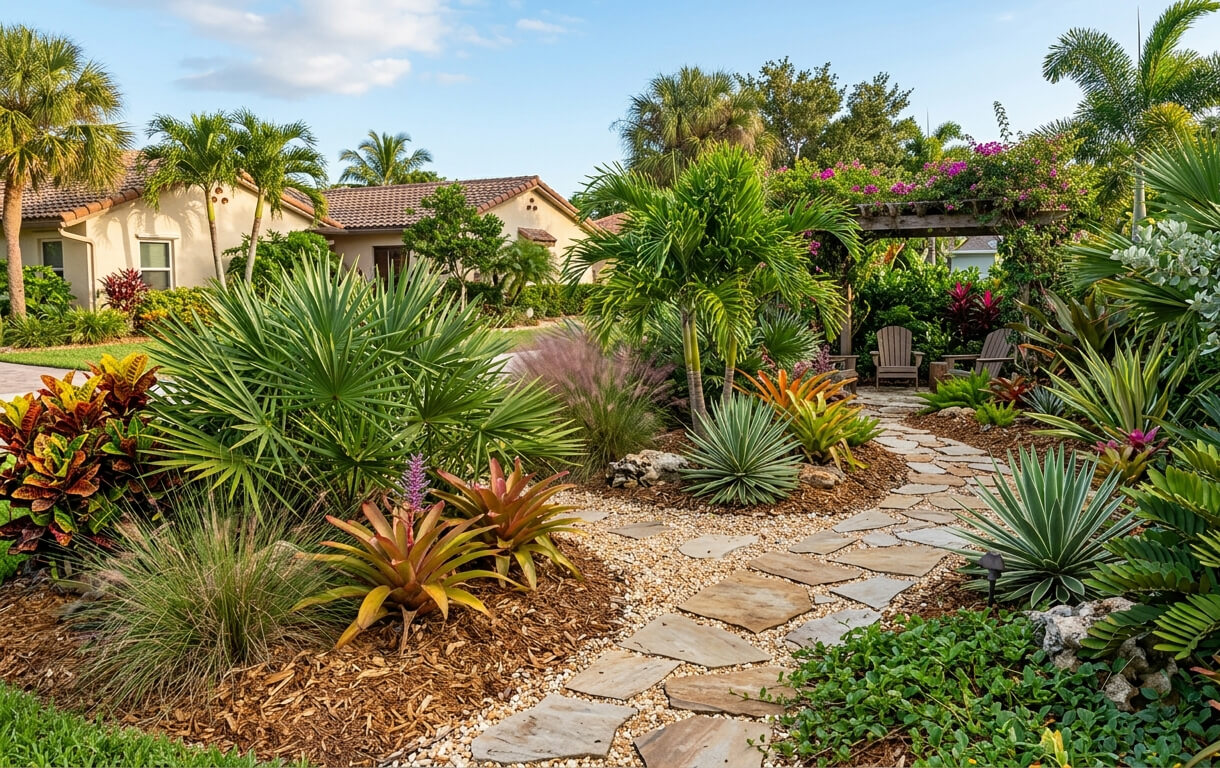
A simpler approach is to select a limited group of dependable plants and repeat them throughout the property. Repetition creates a more organized appearance while making pruning, fertilizing and irrigation easier to manage.
UF/IFAS recommends using fewer hardy plants in larger groups and grouping plants with similar water requirements.
Different varieties can still be used to create contrast through:
- Plant height
- Leaf shape
- Texture
- Seasonal flowers
- Varying shades of green
- Layered planting beds
The goal is controlled variety rather than one of everything.
3. Choose Plants Adapted to South Florida Conditions
A low-maintenance plant should be capable of remaining healthy without frequent watering, spraying, pruning or fertilization.
South Florida plant selections may also need to tolerate alkaline, sandy or limestone-based soils. UF/IFAS maintains a list of hundreds of low-maintenance plants suitable for the region and defines these plants by their reduced care requirements and adaptability.
Plant choice should still be based on the individual property. A species that performs well in one part of South Florida may not be appropriate for every combination of sunlight, moisture, soil and salt exposure.
4. Plan for Mature Plant Size
Small nursery plants can be misleading. A shrub that looks compact at installation may eventually cover a walkway, block a window or compete with neighboring plants.
Crowded landscaping usually requires more frequent trimming and can reduce air circulation.
Before planting, consider:
- Mature height and width
- Distance from the building
- Clearance around walkways
- Space around air-conditioning equipment
- Visibility near driveways
- Distance from fences and utilities
Giving plants enough room to reach a natural shape creates a cleaner design and reduces the need for repeated hard pruning.
5. Group Plants by Water Requirements
Plants with similar irrigation needs should be placed in the same zones. This practice is sometimes called hydrozoning.
When high-water and drought-tolerant plants share one irrigation zone, part of the bed may receive too much or too little water.
Grouping plants by water requirements makes irrigation more efficient and helps avoid:
- Root problems caused by saturated soil
- Wilting in dry sections
- Unnecessary water use
- Uneven plant growth
- Constant sprinkler adjustments
Drip or micro-irrigation may be suitable for certain planting beds because water can be delivered more directly to the root area.
6. Use Mulch Strategically
Mulch gives planting beds a finished appearance, helps retain soil moisture and can limit weed growth. UF/IFAS includes mulch as one of the core Florida-Friendly Landscaping principles.
Mulch should not be piled against tree trunks or plant stems. Excess material around the base can hold unnecessary moisture against the plant.
Defined bed edges also keep mulch in place and reduce the amount that washes onto walkways or turf.
7. Reduce Difficult-to-Maintain Lawn Areas
Turf can be useful for recreation, visual openness and connecting parts of the property. Problems arise when lawn is installed in narrow strips, deep shade, steep slopes or areas that remain wet.
These sections may require more irrigation and repeated repair while still looking thin.
Depending on how the yard is used, difficult turf areas may be replaced with:
- Expanded planting beds
- Groundcover
- Decorative gravel
- Paver walkways
- Mulched areas
- Shade-tolerant landscaping
- A drainage feature
The best design keeps lawn where it serves a purpose rather than treating it as the default material for every open space.
8. Solve Drainage Problems Before Installing New Landscaping
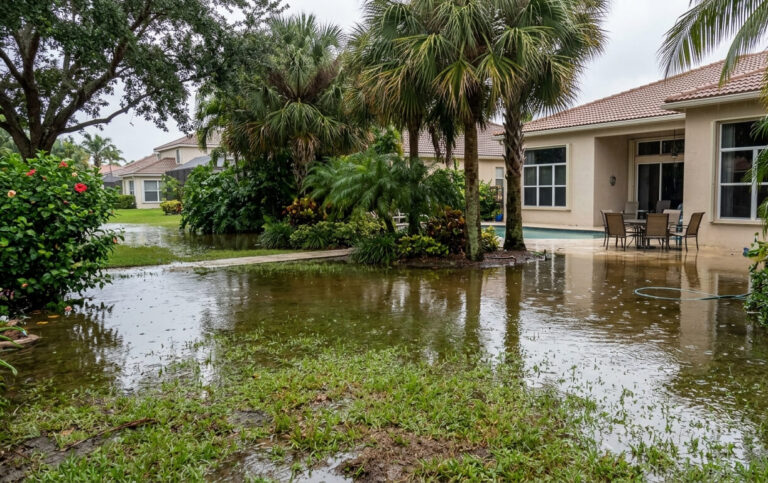
New plants will not correct a yard that remains flooded after rain. In fact, additional beds, borders and hardscape can change how water moves across the property.
Drainage planning may include grading adjustments, swales, catch basins, underground piping, permeable surfaces or rain gardens. These features can help guide, collect or absorb runoff when they are designed for the conditions of the site.
Addressing drainage first helps protect the investment in plants, sod and hardscaping.
9. Combine Softscape and Hardscape
Plants are only one part of landscape design. Pavers, stone borders, retaining features and walkways can make the property easier to navigate and define how each area is used.
Hardscape can help create:
- A clear path to the entrance
- A seating or entertaining area
- Cleaner transitions between lawn and planting beds
- Improved access around the side of the home
- Defined spaces around pools or patios
- A more structured front-yard appearance
Hardscape should be planned with drainage in mind so that runoff is not redirected toward the building or a neighboring property.
10. Design Around Your Maintenance Preferences
A successful landscape should match the amount of maintenance the property owner realistically wants to perform.
Before finalizing the design, decide how much time should be spent on:
- Pruning
- Mowing
- Seasonal color replacement
- Leaf cleanup
- Irrigation adjustments
- Fertilization
- Weed control
A landscape designed for monthly professional care may look different from one intended to need only occasional cleanup.
Professional Landscape Design in South Florida
Green Planet provides landscape design, irrigation, drainage, tree care, land clearing and stone or paving services for residential and commercial properties across South Florida.
Whether the goal is a cleaner front yard, a more functional backyard or a complete outdoor transformation, the process should begin with an evaluation of the property.
Request a consultation to discuss your ideas, existing landscape problems and the most practical way to improve the space.
Frequently Asked Questions
What makes a landscape low-maintenance?
A low-maintenance landscape uses plants suited to the site, efficient irrigation, manageable lawn areas and materials that do not require constant replacement or correction.
Does low-maintenance landscaping mean using only native plants?
Not necessarily. Native plants can be valuable, but the main consideration is whether each plant fits the property’s soil, light, moisture and available space.
Should drainage be completed before planting?
In most cases, existing drainage problems should be addressed before installing new plants, sod or hardscape so that the completed landscape does not interfere with water movement.