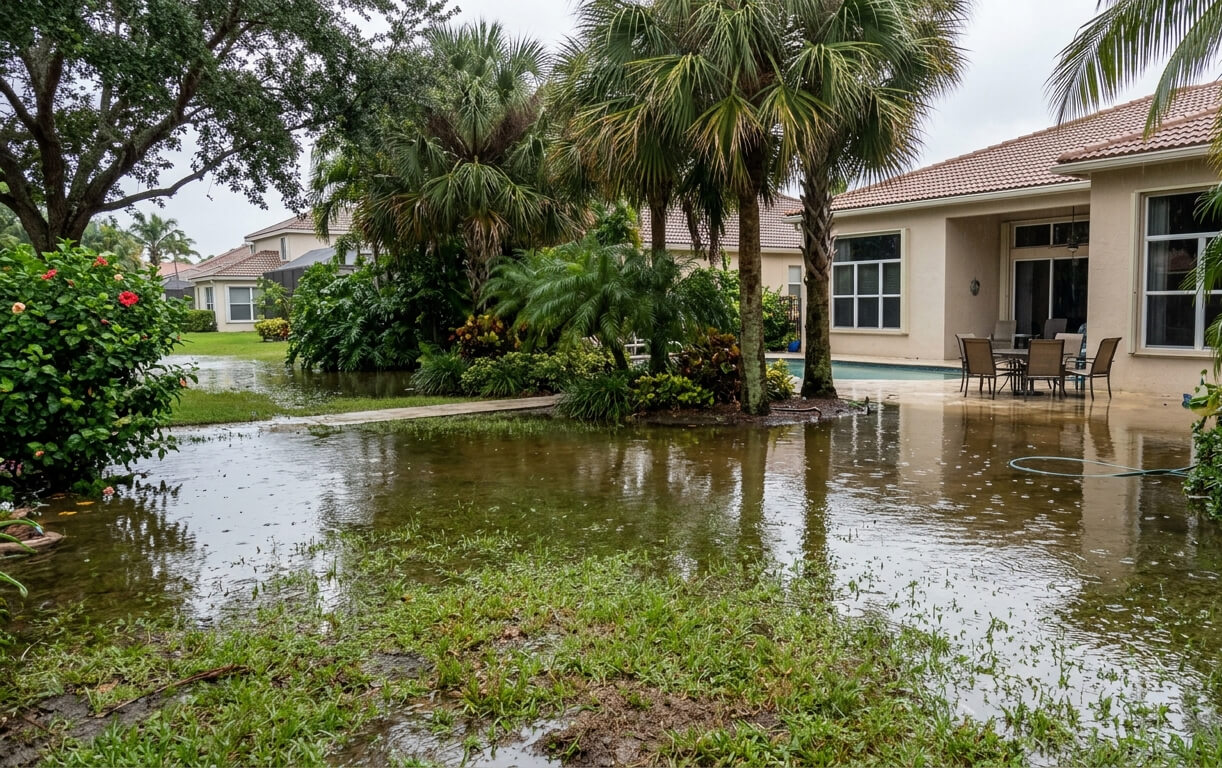
A few puddles immediately after a storm may be normal. Water that remains for hours or returns after every period of heavy rain can indicate a larger drainage problem.
Standing water can damage grass, weaken landscape plants, create muddy areas and make parts of the property difficult to use. Many plants cannot tolerate prolonged flooding because saturated soil limits the oxygen available to their roots.
Understanding why the water collects is the first step toward selecting the right drainage solution.
Common Signs of a Yard Drainage Problem
A drainage issue is not always limited to a visible pool of water. Other warning signs include:
- Soggy grass long after rainfall stops
- Mud near walkways or entrances
- Water collecting beside the foundation
- Mulch or soil washing out of planting beds
- Erosion channels across the yard
- Algae growing on patios or paving
- Plants declining in consistently wet areas
- Water flowing from a neighboring property
- Downspouts discharging into low spots
These symptoms often become more noticeable during South Florida’s periods of frequent or intense rainfall.
Why Is Water Collecting in Your Yard?
Improper Grading
The ground should direct water away from buildings and toward an appropriate drainage area. If the property contains low spots or slopes toward the house, runoff may collect near the foundation, patio or planting beds.
Grading problems may have existed since construction or developed gradually as soil settled.
Compacted Soil
Heavy equipment, repeated foot traffic and construction work can compress soil. Compacted ground absorbs water more slowly, allowing rainfall to remain on the surface.
Adding new plants or sod without addressing the underlying soil condition may hide the problem temporarily without resolving it.
Downspout Discharge
Roof gutters collect a considerable amount of water during heavy rain. When a downspout releases that water beside the home or into a low section of the yard, the surrounding soil can quickly become saturated.
Redirecting the discharge may be part of the solution, but the new outlet must not simply move the problem to another area.
Blocked or Damaged Drainage Components
Existing catch basins, channels and underground pipes can become clogged with leaves, soil, roots or landscape debris.
A drainage system that worked properly in the past may become less effective as sediment accumulates or surrounding landscaping changes.
Runoff From Hard Surfaces
Roofs, driveways, patios and walkways do not absorb rainfall. Water moves across these surfaces and enters the surrounding landscape.
Properties with extensive hardscaping may need dedicated collection points or permeable areas that allow water to enter the soil safely.
Excessive Irrigation
The problem may not come entirely from rain. Broken sprinkler heads, leaking pipes, incorrect irrigation schedules or overlapping zones can keep the soil saturated.
A drainage inspection should therefore consider both rainfall and the property’s irrigation system.
Professional Drainage Solutions
There is no single drainage system that works for every property. The correct solution depends on where the water originates, how the site is graded, soil conditions and where the water can be safely directed.
Regrading Low Areas
Minor grading adjustments can help guide surface water away from buildings and frequently used parts of the yard.
Regrading may involve filling depressions, reshaping planting areas or creating a gentle path that allows runoff to move toward an approved outlet.
Swales
A swale is a shallow channel designed to guide and slow surface water. Vegetated swales can encourage infiltration while moving runoff away from problem areas.
UF/IFAS notes that swales can transport water, slow runoff, support infiltration and help filter pollutants.
Catch Basins and Underground Pipes
Catch basins collect water at low points and direct it through underground piping. They may be useful near patios, downspouts, driveways or sections of lawn where water regularly accumulates.
Proper placement is critical. A basin installed in the wrong location may capture only a small portion of the runoff.
French Drains
A French drain generally uses a gravel-filled trench and perforated pipe to collect water within saturated soil.
This type of system may help in certain areas, but it should be designed around the property’s soil, elevation and available discharge point.
Channel Drains
Channel drains are commonly installed along the edge of driveways, patios, pool decks or other hard surfaces.
They collect runoff across a wider line rather than at a single low point and can help prevent water from moving toward a garage, doorway or covered outdoor area.
Rain Gardens and Permeable Areas
A properly positioned rain garden can temporarily collect runoff and allow it to soak into the ground. Permeable paving, gravel and other absorbent surfaces can also reduce the amount of water moving across a property.
UF/IFAS recommends rain gardens, berms, swales and permeable surfaces as methods for slowing runoff and allowing more rainfall to enter the soil.
Why a Site Inspection Matters
Installing a drain without identifying the source of the water can lead to disappointing results.
A professional drainage evaluation should consider:
- The highest and lowest areas of the property
- Roof and downspout discharge
- Nearby buildings and hard surfaces
- Existing drains and irrigation
- Soil conditions
- Water entering from adjacent properties
- A suitable and permitted discharge location
The final plan may use one solution or combine grading, collection basins, underground piping and landscape improvements.
Drainage Services in South Florida
Green Planet provides drainage systems, irrigation work and landscape improvements for residential and commercial properties in Coral Springs and other South Florida service areas.
Water collecting near your home, patio or landscape beds should not become a recurring feature of every rainstorm. Request an on-site consultation to identify the source of the problem and receive a practical drainage recommendation.
Frequently Asked Questions
How long is standing water normal after rain?
The answer depends on the amount of rain, soil and property conditions. Water that remains for an extended period or appears after every ordinary storm may indicate poor drainage.
Will adding soil fix a low spot?
It may help in a small area, but adding soil without considering the overall slope can redirect water toward another part of the property.
Can drainage and landscaping be completed together?
Yes. Coordinating drainage, irrigation and landscaping can prevent new planting beds or hardscape features from interfering with water movement.